
How to Freelance Write in 2025: The Complete Beginner’s Guide to High-Paying Clients
In 2025, the demand for high-quality written content hasn’t disappeared—it has evolved. While AI tools can churn out generic blog posts, businesses are desperate for the one thing software can’t provide: Human Experience.
If you are looking for a side hustle or a full-time career that offers location independence and unlimited earning potential, learning how to freelance write is still one of the smartest moves you can make.
But the “old” way of doing it (applying to low-paying content mills and writing fluff) is dead. To succeed today, you need a strategy that embraces specialization, personal branding, and the modern tech stack.
Whether you are a student, a stay-at-home parent, or a professional looking to pivot, this guide will teach you exactly how to freelance write in the current economy; from finding your first client to scaling to $5,000+ months.
Part 1: The Mindset Shift (Employee vs. Business Owner)
The biggest mistake beginners make when they start learning how to freelance write is treating it like a job application. They wait for permission. They wait for someone to “pick” them.
To succeed, you must flip the script. You are not an employee; you are a Business Owner.
- Employees wait for tasks.
- Freelance Writers pitch solutions.
When you research how to freelance write, you will find that the highest-paid writers don’t just sell words. They sell traffic, leads, and authority. When you pitch a client, you aren’t saying, “I can write 1,000 words.” You are saying, “I can write an article that helps you rank for this keyword and bring in customers.”
Understanding this value proposition is step one in mastering how to freelance write effectively.
Part 2: Choosing Your “Shoulder Niche”
Generalists go broke. Specialists get rich.
In 2025, you cannot just be a “writer.” You need a niche. But don’t just pick a broad topic like “Health” or “Tech.” You need what I call a Shoulder Niche—a specific, specialized angle.
Here are the top-paying niches for those figuring out how to freelance write right now:
- Fintech & Crypto: Companies need writers who can explain complex blockchain or banking concepts in plain English.
- SaaS (Software as a Service): Every new software company needs blog posts, case studies, and white papers to sell their tool.
- Sustainability & Green Tech: As ESG (Environmental, Social, and Governance) becomes mandatory for companies, they need writers who understand the jargon.
- AI & Prompt Engineering: Ironically, writing about AI is huge. Companies need guides on how to use their AI tools.
Action Step: Pick one industry you already have some experience in (even if it’s just a hobby). The secret to learning how to freelance write quickly is leveraging what you already know.
Part 3: Building a Portfolio with Zero Experience
The “Spec Work” Strategy.
A common question when asking how to freelance write is: “How do I get clients without a portfolio, and how do I get a portfolio without clients?”
The answer is Spec Work (Speculative Work).
You do not need to wait for a client to hire you to write something. You can create your own samples.
The “Medium” Hack
- Write 3 high-quality articles in your chosen niche.
- Publish them on Medium.com or LinkedIn Articles (both are free).
- These are now live, published links you can send to clients.
What to write about:
- A “How-To” Guide: e.g., “How to Save Money on SaaS Subscriptions.”
- A Listicle: e.g., “7 Trends in Fintech for 2025.”
- A Case Study: Pick a brand you like (e.g., Apple) and write a breakdown of their marketing strategy.
When you are figuring out how to freelance write, remember that clients don’t care where it was published; they just want to see if you can write.
Part 4: The Client Hunt (Inbound vs. Outbound)
Where the money is hiding.
Now that you have samples, how do you find people to pay you? There are two main methods for those learning how to freelance write: Inbound (they come to you) and Outbound (you go to them).
Method A: The Job Board Grind (Low Barrier)
This is where everyone starts. It’s competitive, but it builds character.
- ProBlogger Job Board: High quality, competitive.
- Best Writing: A curated list of writing jobs.
- LinkedIn Jobs: Filter by “Remote” and “Contract.”
Method B: Cold Pitching (High Reward)
This is the secret weapon for those who truly master how to freelance write. You bypass the competition by emailing clients who aren’t even advertising yet.
The “Value-First” Pitch Script:
Subject: Quick idea for the [Company Name] blog
Hi [Name],
I’ve been following [Company Name] and love your recent post on [Topic].
I noticed you haven’t covered [Specific Topic related to their niche] yet. I’m a freelance writer specializing in this space, and I’d love to write that piece for you to help you target [Specific Keyword].
Here are 3 samples of my work: [Link 1], [Link 2], [Link 3].
Are you open to a guest post or a freelance collaboration?
Best, [Your Name]
Learning how to freelance write using cold outreach is a numbers game. Send 5 of these a day, and you will get a reply eventually.
Part 5: Formatting for the Web (SEO Basics)
Writing for screens is different than writing for school.
If you want to know how to freelance write professionally, you must unlearn everything your English teacher taught you. Internet readers scan; they don’t read.
The “Skimmable” Rules:
- Short Paragraphs: No more than 3 lines of text. Walls of text scare mobile users.
- Use Headers (H2/H3): Break up your points clearly (like I am doing in this article).
- Bullet Points: Use them liberally to list data or benefits.
- Bold Key Phrases: Guide the reader’s eye to the important parts.
If you ignore formatting, your content looks amateur. Part of knowing how to freelance write is knowing how to keep a user’s attention in the TikTok era.
Part 6: Pricing Your Work in 2025
Don’t be the $5 writer.
The hardest part of learning how to freelance write is talking about money.
The 2025 Rate Card for Beginners:
- Per Word: $0.05 – $0.10 (Beginner) / $0.15 – $0.30 (Intermediate).
- Per Project: $50 – $100 per article (Beginner) / $250 – $500 (Intermediate).
- Per Hour: Avoid hourly pricing if possible. It punishes you for being fast.
Pro Tip: Never ask a client “What is your budget?” First, tell them your price. “My rate for a 1,000-word SEO article is $200.” If they can’t afford it, they aren’t your client. Confidence is a huge part of learning how to freelance write.
Part 7: Using AI (Without Losing Your Soul)
The elephant in the room.
You cannot write an article on how to freelance write in 2025 without mentioning AI. Should you use ChatGPT? Yes. Should you let it write for you? No.
The “Cyborg” Workflow:
- Use AI for Research: “Give me 10 statistics about remote work in 2025.”
- Use AI for Outlining: “Create a structure for an article about dog training.”
- Write the Draft Yourself: This is non-negotiable. AI writing is often bland, repetitive, and factually incorrect.
- Use AI for Editing: “Check this text for grammar errors and make it punchier.”
Clients hire humans because they want a voice. If you just copy-paste from ChatGPT, you will lose your clients to the robot. Mastering how to freelance write today means mastering AI as an assistant, not a replacement.
Part 8: Common “Rookie” Mistakes to Avoid
Save yourself months of failure.
As you learn how to freelance write, you will likely stumble. Here are the pitfalls to watch for:
- Ghosting on Deadlines: The easiest way to get fired. If you are late, communicate early. Reliability beats talent every time.
- Not Reading the Style Guide: Clients usually have a document explaining their tone and formatting rules. Ignoring this is a cardinal sin in learning how to freelance write.
- Taking Rejection Personally: You will get told “No.” A lot. It’s not personal; it’s business. Keep pitching.
- Stopping the Hunt: Many writers get one client and stop looking. Then that client cancels, and they have $0 income. Always be pitching, even when you are busy.
Part 9: Scaling to a Full-Time Income
From Side Hustle to Career.
Once you have mastered the basics of how to freelance write, the goal is to scale. You do this by:
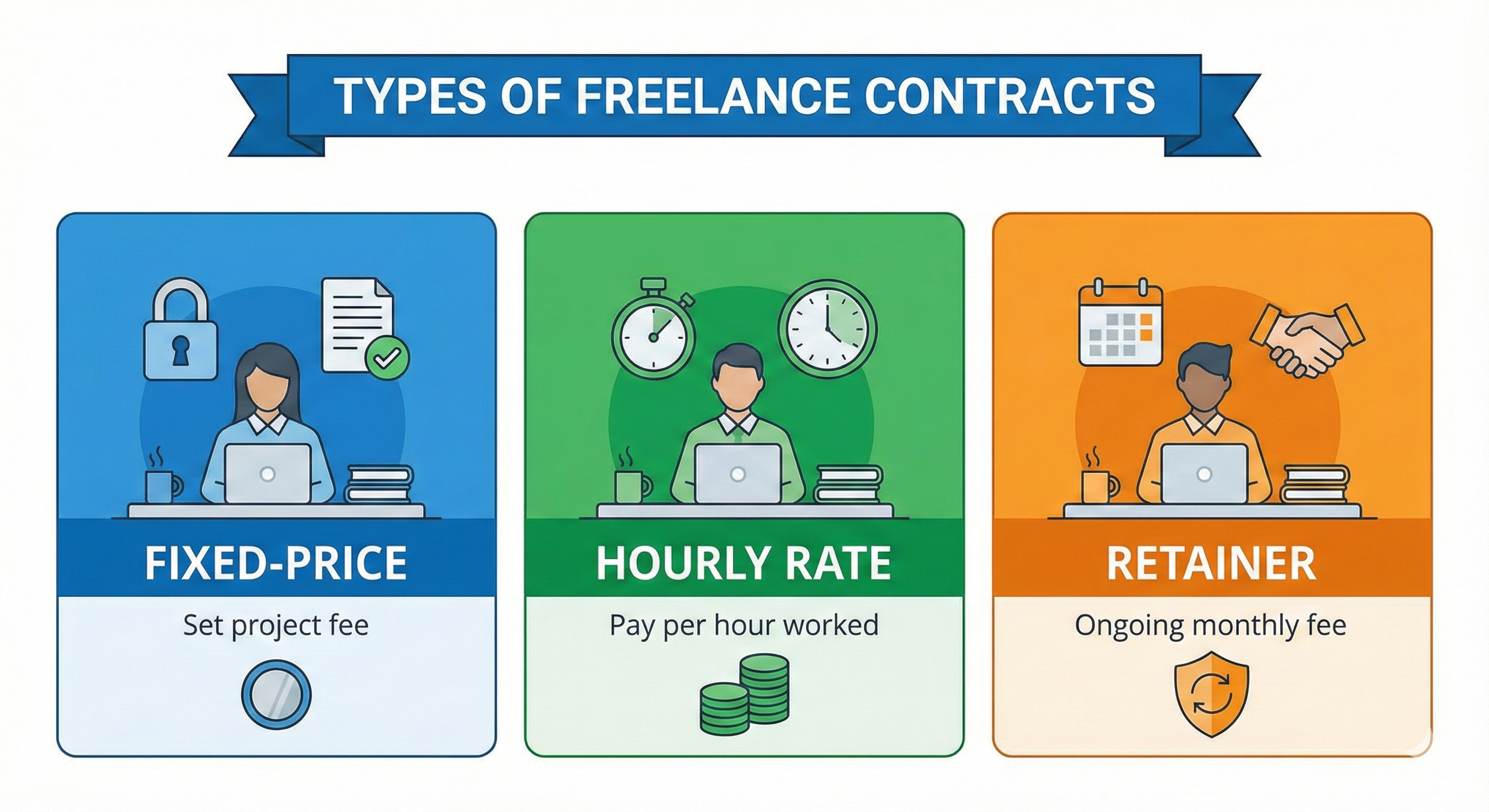
- Retainers: Moving clients from “one-off articles” to “4 articles per month” contracts. This stabilizes your income.
- Upsells: Offering extras like “uploading to WordPress,” “sourcing images,” or “social media captions” for an extra fee.
- Referrals: Asking happy clients, “Do you know anyone else who needs content?”
Final Thoughts: Just Start
The only difference between you and a highly paid writer is that they started. They wrote the bad articles, sent the awkward pitches, and learned how to freelance write by actually doing it.
You don’t need a degree. You don’t need permission. You need a laptop, a WiFi connection, and the courage to hit “Send” on that first pitch email.
The world is waiting for your words. Go write them.