
7 Ways to Get Paid in USD from Anywhere in the World (2025 Guide)
The internet has leveled the professional playing field, but the global banking system is still catching up.
If you live in countries like Nigeria, India, the Philippines, or Argentina, landing a high-value client is only half the battle. The other half is keeping the money. Earning $1,000 feels great until your local bank takes a 10% “conversion fee” or forces you to accept a terrible exchange rate that devalues your hard work instantly.
In 2025, you do not need to accept this.
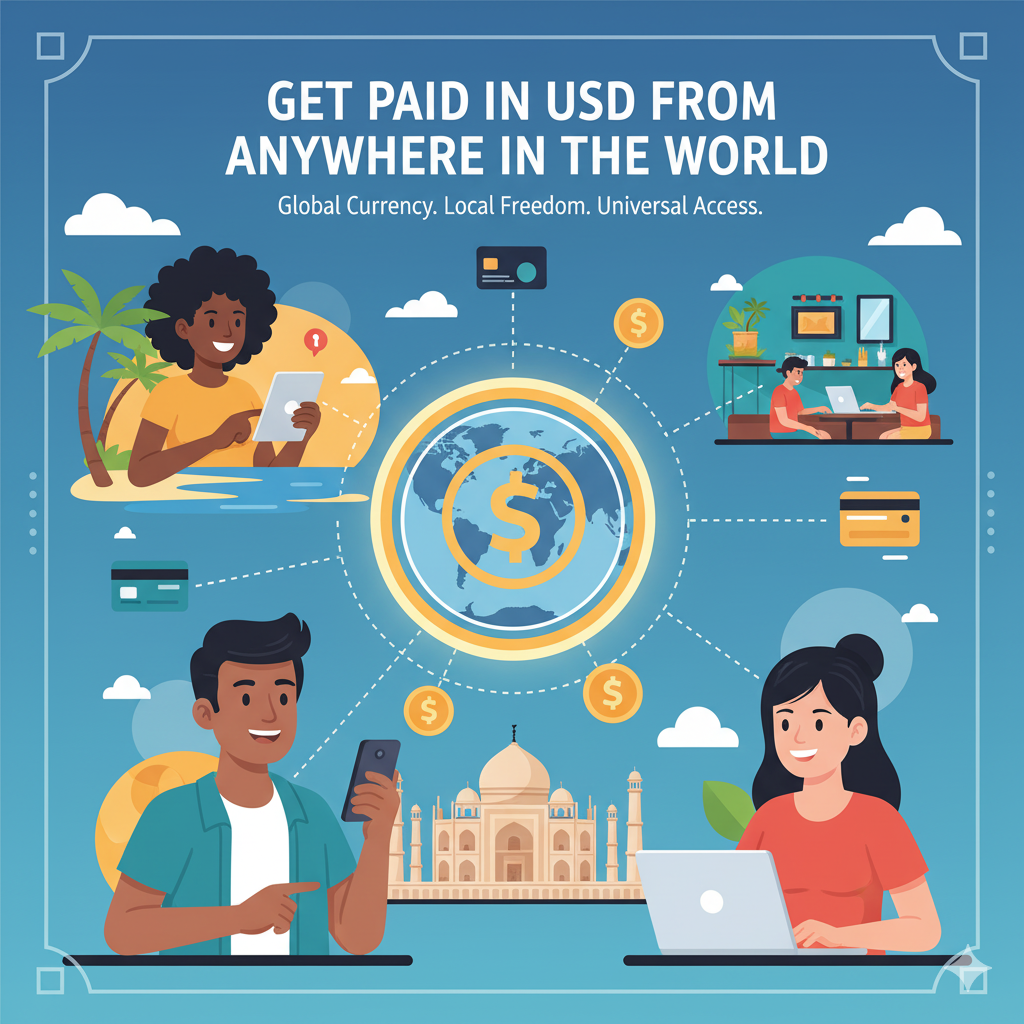
One of the smartest financial decisions you can make is figuring out how to get paid in USD and keep it in USD. Holding a strong currency protects your purchasing power against local inflation and economic instability.
The good news? You don’t need a US visa, a Social Security Number, or an LLC to open a US bank account anymore. You just need the right Fintech stack. This guide will walk you through the 7 most effective, low-fee methods to get paid in USD from anywhere, ensuring you keep more of what you earn.
1. Open a “Virtual” US Bank Account (No LLC Required)
Best for: Individual freelancers who need a routing number for direct deposits.
Here is a secret about US clients: They hate “Wire Transfers.” Sending a SWIFT transfer is expensive ($30+) and slow. Most US companies prefer to pay via ACH Transfer (Direct Deposit) because it is free and instant for them.
If you want to make it easy for clients to pay you, you need to provide them with a US Routing Number and Account Number.
The Solution: GrabrFi or GigWage
Unlike standard wallets, platforms like GrabrFi give you a legitimate US bank account held by a partner bank (like Regent Bank).
- How it works: You download the app, verify your identity with your local passport/ID, and receive official US banking details.
- Why it helps you get paid in USD: You can give these details to any client or platform (like Upwork). To them, it looks like they are paying a local American.
- The Bonus: You receive a US Debit Mastercard. This allows you to pay for business expenses (like ChatGPT Plus, hosting, or software) directly in dollars, avoiding double-conversion fees.
2. The “Local Collection” Method (Wise, Grey, & Geegpay)
Best for: Freelancers in Africa, Asia, and Latin America optimizing for exchange rates.
If your goal is to get paid in USD and then convert it to your local currency (Naira, Rupees, Pesos) for daily living expenses, do NOT use your traditional local bank. They use the “Official Bank Rate,” which is often significantly lower than the real market value.
For Global Users: Wise (formerly TransferWise)
Wise is the gold standard. It gives you a “USD Balance” with local account details.
- The Strategy: You receive the money in Wise. When you transfer it to your local bank, Wise uses the Mid-Market Rate (the real rate you see on Google) and charges a tiny transparent fee. This creates massive savings over time.
For African Users: Grey.co or Geegpay
If you are in Nigeria, Kenya, or Ghana, the gap between the “Official Rate” and the “Parallel Market Rate” (Black Market) can be 20-30%.
- The Strategy: Platforms like Grey or Geegpay provide virtual foreign accounts specifically for African freelancers.
- Why use them to get paid in USD: They allow you to receive dollars and then swap them for Naira or Cedis at a rate much closer to the parallel market rate. On a $1,000 payment, this can mean an extra $200 in your pocket compared to a standard bank transfer.
3. Use “Merchant of Record” Platforms (For Digital Products)
Best for: Creators selling templates, ebooks, courses, or software.
If you create digital assets, you don’t want to invoice people manually. You want a checkout page that works while you sleep. However, setting up Stripe in unsupported countries is a nightmare.
The Tool: Lemon Squeezy or Gumroad
These platforms act as the Merchant of Record (MoR). This means they legally sell the product to the customer for you.
- How it works: They collect the payment from the customer in the US, handle the complicated global sales tax (VAT), and take a small fee.
- The Payout: They pay you out in a lump sum. Crucially, they allow you to get paid in USD directly to your PayPal or Wise account, regardless of where you live.
- 2025 Update: While Stripe Atlas allows you to form a US LLC to get Stripe, it costs $500+. Lemon Squeezy is free to start and works globally instantly.
4. Stablecoin Invoicing (USDC / USDT)
Best for: Tech-forward freelancers and Web3 jobs.
If you want to bypass the banking system entirely, crypto is the fastest, cheapest way to get paid in USD. But don’t accept Bitcoin (which is volatile). Accept Stablecoins.
The Strategy: USDC (USD Coin)
Ask your client if they are open to paying in USDC on a low-fee network like Solana or Polygon.
- Why do this?
- Speed: The money arrives in your wallet in 5 seconds.
- Cost: The transaction fee is often less than $0.01.
- Safety: USDC is pegged 1:1 to the US Dollar, so the value doesn’t fluctuate like Bitcoin.
- The Off-Ramp: Once the funds are in your wallet, you can sell them on a P2P exchange (like Binance or Bybit) for your local currency. In many countries, P2P rates are higher than bank rates, meaning you actually make a profit on the exchange.
Note: Only use this method if your client is tech-savvy. Do not ask a traditional law firm or corporate client to pay you in crypto; it will look unprofessional.
5. Global Payroll Platforms (Deel & Remote)
Best for: Full-time remote employees wanting the security of a contract.
If a US company hires you full-time, they cannot just “Venmo” you a salary every month. They need to be compliant with labor laws.
The Solution: Employer of Record (EOR)
Platforms like Deel, Remote.com, and Oyster HR act as the legal middleman.
- How it works: The US company pays Deel in USD. Deel hires you legally in your country.
- The Benefit: You get a proper employment contract, insurance benefits, and most importantly; the ability to get paid in USD (or a currency pegged to it) deposited directly into your preferred account.
- Why push for this: It makes you look like a “safe” hire to US companies who are afraid of misclassifying contractors.
6. Niche Job Boards (The “USD Default” Market)
Best for: Finding high-paying work that doesn’t require negotiation.
One of the hardest parts of trying to get paid in USD is finding clients who are willing to pay US rates. If you look on local job boards, you will see local salaries. You need to look where the dollar is the default currency.
Where to Look:
- Crossover for Work: This platform is famous for paying standardized USD salaries globally. They often pay $100k/year for senior software roles, regardless of whether you live in New York or New Delhi.
- Turing.com: Matches developers with US tech firms. They handle all the billing, ensuring you get paid in USD on time, every time.
- Web3 Jobs: Boards like CryptocurrencyJobs.co list roles that almost exclusively pay in USDC or USDT.
7. Affiliate Marketing (The “Commission” Route)
Best for: Passive earners and content creators.
You don’t always need a client to earn dollars. You can promote US software products.
The Strategy: High-Ticket SaaS Affiliates
Sign up for the affiliate programs of tools you already use (e.g., Notion, Semrush, ConvertKit, or Shopify).
- The Payout: These companies pay commissions (often 30% recurring) to your PayPal or Tipalti account.
- Why it works: Since the customers are global and the companies are US-based, the revenue is naturally in hard currency. It is one of the most scalable ways to get paid in USD without trading your time for money.
Planning to travel? If you are earning in dollars, you might want to spend them in Europe. Read our guide on How to Work Remote in Europe in 2025 to see how your USD income can qualify you for Digital Nomad Visas.
Final Tips: Protecting Your Earnings
Learning how to get paid in USD is step one. Step two is protecting that money.
- Don’t Auto-Convert: Go into your PayPal or Upwork settings and turn OFF “Auto-Convert.” If you let them convert your money to your local currency automatically, they will take a massive 4-5% cut. Always withdraw in USD to a specialized account (like Wise) first.
- The “Hold” Strategy: Use your GrabrFi or Wise account as a savings account. Only convert what you need for this month’s rent and food. Keep the rest in USD. This protects your life savings from local inflation.
“Location Independence” isn’t just about where you work; it’s about where your money lives. By setting up this financial stack today, you ensure that every hour you work is valued at a global standard, not a local one.